
A brownie is a dense, moist and compact chocolate cake, cut into square portions, which originated in the United States in the late 19th century. It differs from a sponge cake in that it contains little or no raising agent, more chocolate and more fat, and has a moist, fudgy texture instead of a light, airy one.
A brownie is a dense, moist chocolate treat that is baked in a tin and cut into squares. Its hallmark is its texture: compact and moist inside, with a thin crisp layer on top. It sits halfway between a cake and a soft cookie.
A classic brownie contains chocolate or cocoa, butter or oil, sugar, eggs and flour, in a ratio that favours fat and chocolate over flour. That is why it doesn’t rise like a sponge cake: it stays low, dense and deep in flavour. It is eaten by hand, warm or at room temperature.
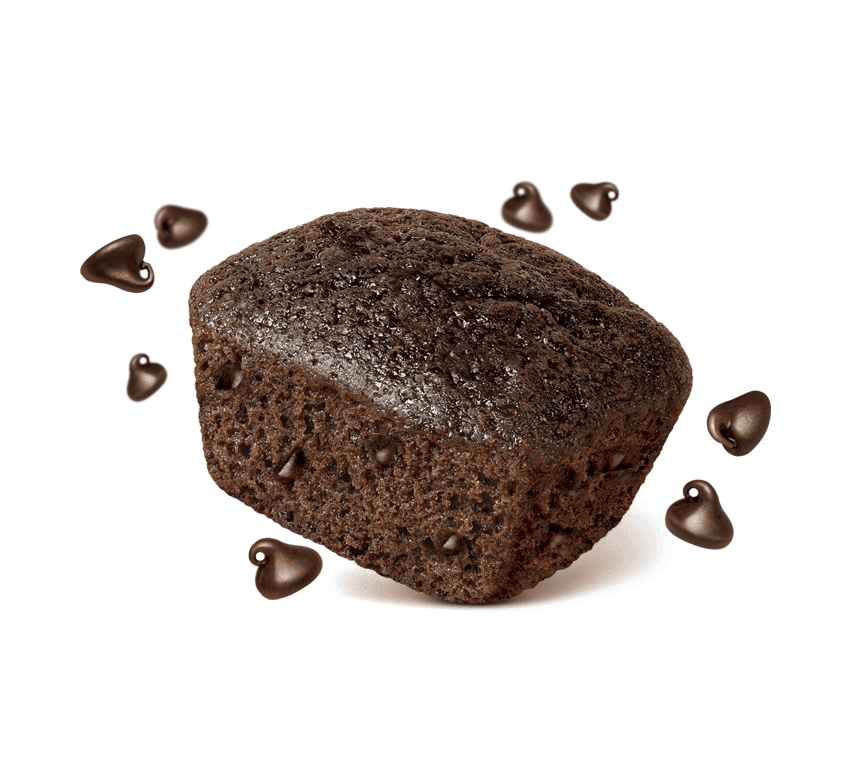
There are two main styles. The fudgy style is very moist and almost creamy in the centre; the cakey style is somewhat lighter and fluffier, closer to a sponge cake. Most of the brownies that win people over are the fudgy kind, with chocolate chips scattered through the crumb.
It can be enjoyed in many ways: on its own, warm, with a scoop of ice cream or as the base for other desserts. It is a versatile treat, easy to carry and keeps well outside the fridge, which is why it works for both afternoon snacks and parties.
The brownie originated in the United States in the late 19th century. The most commonly cited version places its birth at the Palmer House hotel in Chicago in 1893, when a compact chocolate treat was created for the World’s Columbian Exposition.
The first recipes bearing the name «brownie» appeared in print in the early 20th century, in American cookbooks. The name refers to its deep brown colour. Since then it has spread all over the world as one of the most recognisable chocolate treats.
Today the brownie exists in both homemade and packaged versions. At its bakery in Alfamén (Zaragoza), Mr. Brownie has been making its own version with Belgian chocolate since 2018, drawing on the know-how of Magdalenas Lázaro, a bakery that opened in 1948.
The difference between a brownie and a sponge cake lies in the raising agent, the fat and the texture. A brownie contains hardly any raising agent, so it stays dense and low; a sponge cake contains baking powder, rises and turns out light and airy. A brownie also packs more chocolate and fat.
The choice depends on the moment. If you are after an intense, moist, bite-sized treat, the brownie wins. If you prefer something light to go with a coffee or to fill with cream or custard, the sponge cake is a better fit. They don’t compete: they satisfy different cravings.
This table compares a brownie and a sponge cake point by point, so you can see why they taste different and are served differently:
| Feature | Brownie | Sponge cake |
|---|---|---|
| Texture | Dense, moist and fudgy | Light, fluffy and airy |
| Raising agent | Little or none | Baking powder or raising agent |
| Fat and chocolate | High proportion; lots of chocolate | Less fat; chocolate optional |
| Height | Low and compact | Tall and well risen |
| How it is cut | Into squares or rectangles | Into portions or slices |
| How it is served | By hand, warm or cold | On a plate, plain or filled |
The best brownie combines a fudgy texture with quality chocolate. Baking it just right leaves the centre moist and the top with that thin, crackly sheen. Overbake it and it loses the moisture that defines it.
Chocolate makes all the difference. A good brownie uses chocolate with enough cocoa butter, which adds body and a well-rounded flavour. Belgian chocolate is a common benchmark for its smoothness and cocoa content, and you can taste it in every bite.
The Belgian chocolate brownies aim for exactly that balance: a moist crumb, chocolate chips and a perfect bake so they stay soft and fluffy inside.
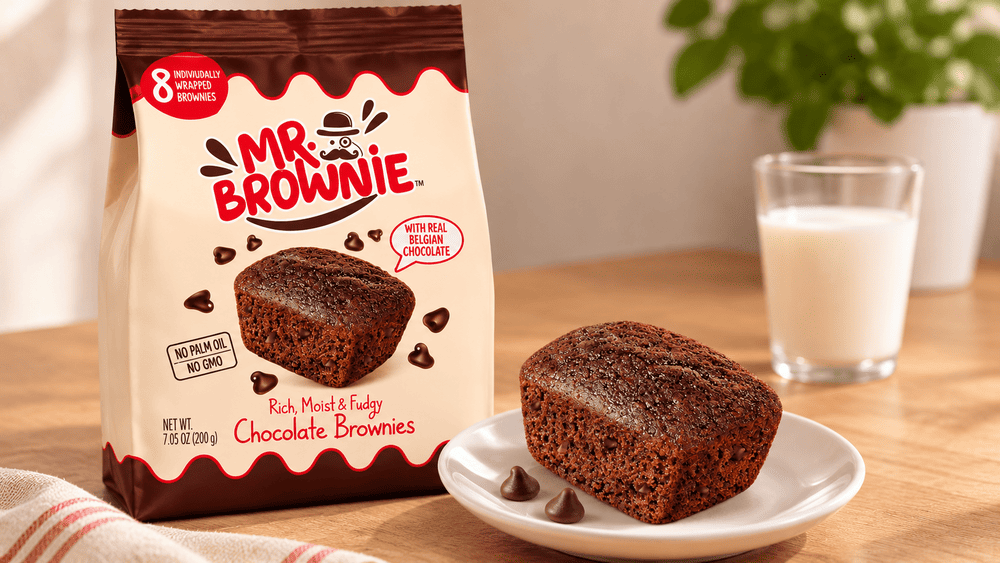
Mr. Brownie chocolate brownies are soft, fluffy brownies with Belgian chocolate chips, free from palm oil, GMOs and artificial colourings or flavourings. They come in individually wrapped portions, ready for an afternoon snack or to take with you. They are even better warmed for a few seconds, when the chocolate melts.
You can browse the full catalogue of brownies and treats or buy them directly from the online shop, with delivery throughout Spain.
A brownie is a dense, moist chocolate cake, baked in a tin and cut into squares. It is known for its fudgy texture, a thin crisp crust on top and an intense chocolate flavour. It contains little flour and little raising agent, which keeps it low and compact rather than light and fluffy.
The brownie was born in the United States in the late 19th century. The most widespread story places it at the Palmer House hotel in Chicago in 1893, during the World’s Columbian Exposition. The first recipes with that name were published in the early 20th century and its fame soon spread around the world.
A brownie contains little or no raising agent, more chocolate and more fat, so it stays dense, low and moist. A sponge cake contains baking powder, rises and turns out light and airy. In short: a brownie is moist and compact; a sponge cake is light and tall.
A 50-gram serving of brownie usually has around 200 to 250 calories, depending on the recipe and the amount of chocolate. Packaged versions usually come in smaller individual portions of about 25 grams. For the exact value of each product, always check the nutrition information on the label.
A brownie is dense and moist because it contains plenty of fat and chocolate, little flour and hardly any raising agent. That ratio stops it from rising like a sponge cake and concentrates the moisture in the crumb. A short bake that leaves the centre moist completes that characteristic fudgy texture.
A brownie is a dense, moist, low chocolate cake, very different from a light, fluffy sponge cake. If you want to try a version made with Belgian chocolate, soft and fluffy inside and individually wrapped, take a look at Mr. Brownie’s brownies and choose your format.